UV laser markers
UV laser markers: cold marking on glass, clear acrylic and plastics
A UV laser marks by breaking surface bonds rather than by burning, which is why it works on glass and clear acrylic that a CO2 machine cracks and a fiber machine passes straight through. Laser Oracle records the published wattage, marking field and material list for each machine.
All accessoriesOf the four we currently hold, two state wavelength and two do not. Live prices start at $3,299 and refresh every three hours, so no figure on this page is more than 24 hours old.
2/4
state wavelength
2/4
state marking field
4/4
state materials named individually
4
Listings tracked
What Laser Oracle counted hereThe figures above, in full, with what they do and do not prove
Laser Oracle tracks four uv laser markers on Amazon and measures every listing against the specifications that actually decide the purchase. Of the four we currently hold, two state wavelength and two do not. That gap is the finding. These are not obscure figures: they are the ones a buyer needs before choosing, and they are missing from the listing that is doing the selling. Prices and category rankings come from the Amazon Product Advertising API and are refreshed every three hours, so no figure here is more than 24 hours old; all four carry a live price at the moment this page was built. A listing that omits a specification has not told us the product lacks it.
What is selling on Amazon
Ordered by Amazon’s own category placement weighted by price, not by us.
We may earn a commission from these links, at no extra cost to you.

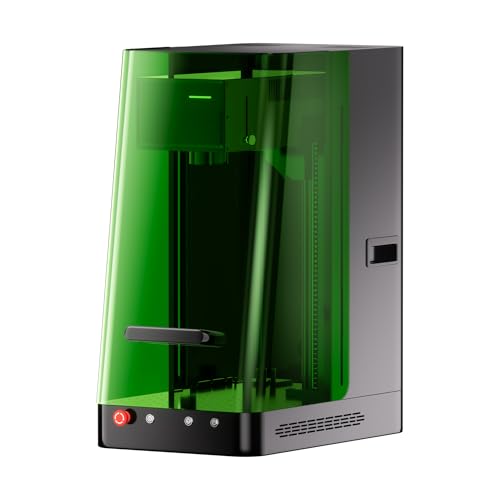
xTool
xTool F2 Ultra UV Laser Engraver
- Wavelength
- Not published
- Marking field
- Not published
- Materials named individually
- Stated in the listing
ComMarker
ComMarker X 6W UV Engraving Machine
- Wavelength
- Stated in the listing
- Marking field
- Stated in the listing
- Materials named individually
- Stated in the listing

Creality
Creality Laser Engraver Falcon T1 UV 5W for Glass Acrylic Ceramics
- Wavelength
- Not published
- Marking field
- Not published
- Materials named individually
- Stated in the listing

ComMarker
ComMarker XE 6W UV Engraving Machine
- Wavelength
- Stated in the listing
- Marking field
- Stated in the listing
- Materials named individually
- Stated in the listing
“Stated in the listing” means the seller printed the figure somewhere in the title or the bullets. It is not a verification, and “not published” is a fact about the listing rather than about the product.
What the listings state, and what they leave out
Counted across every listing we track in this category, when this page was built.
| Specification | Listings stating it | Why it decides the purchase |
|---|---|---|
| Wavelength | 2 of 4No wavelength stated | UV marking works because of the wavelength, not the power — a short wavelength breaks surface bonds instead of heating the material. A listing that does not state it has left out the entire reason to buy the machine. |
| Marking field | 2 of 4No marking field stated | UV fields are small and the lens sets them. On a machine at this price the field is the constraint that decides which products you can actually make. |
| Materials named individually | 4 of 4 | UV is bought for specific materials that CO2 and fiber handle badly — glass, clear acrylic, medical plastics. A listing claiming "all materials" is telling you less than one naming three. |
A count of what the listing says is not a count of what the product does. A seller who omits a figure has told us nothing about the product, only about the listing, and these rows are worded that way on purpose.
Working area, in one unit
Dimensions quoted from the listing. The conversion to inches is our arithmetic.
| Machine | As listed | In inches | Square inches |
|---|---|---|---|
| ComMarker X 6W UV Engraving Machine | 150*400mm | 5.9″ × 15.7″ | 92.6 |
| ComMarker XE 6W UV Engraving Machine | 150*400mm | 5.9″ × 15.7″ | 92.6 |
The middle column is the seller’s own wording and the right-hand columns are ours: millimetres divided by 25.4. Sellers in this category quote in whichever unit flatters the machine, and two beds that sound similar can differ by half again in area, which is the number that decides how many parts fit on one sheet.
How these figures were producedSources, refresh cadence, and what we do not claim
Nothing on this page is a review. Laser Oracle does not test machines and does not claim to, and the brands that dominate this category publish no specification documents to cite either, so the listing doing the selling is the only thing there is to measure. Every claim quoted on this page is the seller's own wording, and the counts are our measurement of those listings rather than of the products themselves. Prices and category rankings are read from the Amazon Product Advertising API and refreshed every three hours. Listing wording is read on the date shown on each product page, and every count is taken again whenever the catalogue changes.