Will a laser cutter fit your bench?
Bench footprint, lid clearance, extraction routing and mains supply decide which machines you can actually install. Laser Oracle publishes the requirement for every machine we have reviewed rather than a general rule of thumb, and reports plainly where a manufacturer publishes nothing.
HomeThe comparison fills as machines are reviewed. Every figure it compares against is quoted from a manufacturer’s own documentation, so a machine appears here only once somebody has read its manual — not because a listing mentioned a size.
Four things decide whether a machine can be installed, and only the first is on the product page: the footprint, the clearance the lid needs above it, where the extraction duct goes, and whether it wants a 240V supply. The last one is the hard blocker, and it is the one buyers discover last.
Or start from what people actually buy
The machines Amazon places highest in their category, priced today. Enter your measurements above and this list narrows to the ones whose makers publish figures your bench clears.
We may earn a commission from these links, at no extra cost to you.

xTool
xTool M2 10W Laser Engraver
#8 in its Amazon category
$599$699Save $100
Check price on AmazonImage: Amazon
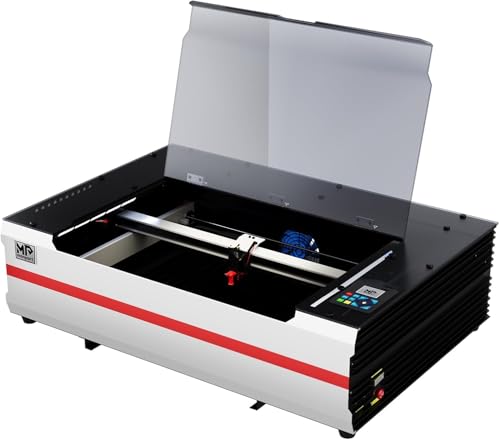
Monport
Monport Reno 65W Desktop CO2 Laser Engraver&Cutter
#32 in its Amazon category
$1,600
Check price on AmazonImage: Amazon
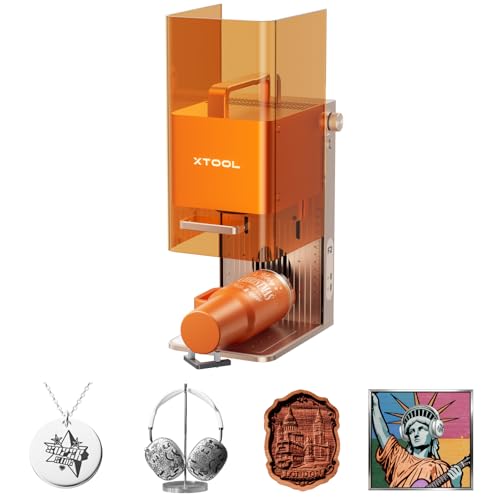
xTool
xTool F2 5W IR & 15W Diode Dual Laser Engraver
#35 in its Amazon category
$1,399$1,699Save $300
Check price on AmazonImage: Amazon
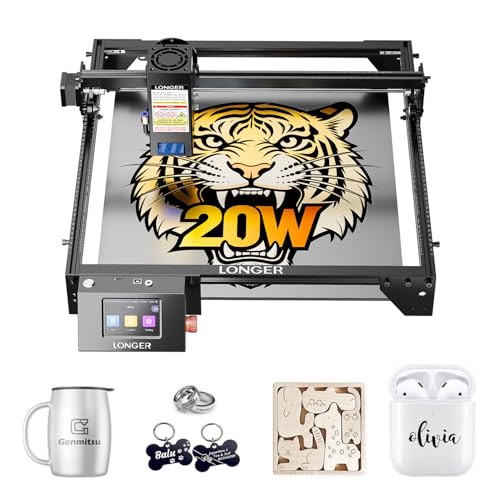
Longer
LONGER Ray5 Laser Engraver and Cutter Machine
#38 in its Amazon category
$370$455Save $85
Check price on AmazonImage: Amazon
How this tool reads a gapWhat each maker states, what none of them do, and why a blank is an answer
Every figure compared here is quoted from the manufacturer’s own page or manual and carries the date it was read on the machine’s page. Laser Oracle has not run any of these machines, and a verdict of “not published” means the maker states no requirement — not that the machine will fit.
The published record is thin, which is the finding. Footprints are usually stated because they go in the shipping details. Extraction duct diameters are usually not, even though that is the figure deciding whether the extractor you already own will connect. Power is stated more often than not, and it is the one this tool is most conservative about: a machine only reports “will not fit” on power when the maker’s own line says 240V and you have told us you have 120V, because the cost of being wrong is a reader buying a machine they cannot plug in.