Laser cleaning machines
Laser rust removal: pulsed against continuous, and what each one leaves behind
A laser cleaning machine strips rust, paint and oil by vaporising the layer above the metal, and the specification that decides what it can be used on is whether the source is pulsed or continuous rather than how many watts it has. Laser Oracle records the source type, the power and the scanning width each listing states, and counts the listings that state none of them.
All machinesOf the 13 we currently hold, nine state supply voltage and phase and four do not. Live prices start at $5,399 and refresh every three hours, so no figure on this page is more than 24 hours old.
13/13
state pulsed or continuous source
13/13
state laser power
11/13
state scanning width
13
Listings tracked
What Laser Oracle counted hereThe figures above, in full, with what they do and do not prove
Laser Oracle tracks 13 laser cleaning machines on Amazon and measures every listing against the specifications that actually decide the purchase. Of the 13 we currently hold, nine state supply voltage and phase and four do not. That gap is the finding. These are not obscure figures: they are the ones a buyer needs before choosing, and they are missing from the listing that is doing the selling. Prices and category rankings come from the Amazon Product Advertising API and are refreshed every three hours, so no figure here is more than 24 hours old; all 13 carry a live price at the moment this page was built. A listing that omits a specification has not told us the product lacks it.
What is selling on Amazon
Ordered by Amazon’s own category placement weighted by price, not by us.
We may earn a commission from these links, at no extra cost to you.

XINCHENG PRECISION
XINCHENG PRECISION SFX Air-Cooled Pulse Laser Cleaning Machine 500W
- Pulsed or continuous source
- Stated in the listing
- Laser power
- Stated in the listing
- Scanning width
- Stated in the listing

LYXC
LYXC 300W Air-cooled Laser Cleaning Machine Pulsed Laser Cleaner APC-300
- Pulsed or continuous source
- Stated in the listing
- Laser power
- Stated in the listing
- Scanning width
- Stated in the listing

XINCHENG PRECISION
XINCHENG PRECISION US Stock 2000W Laser Cleaning Machine
- Pulsed or continuous source
- Stated in the listing
- Laser power
- Stated in the listing
- Scanning width
- Stated in the listing

LYXC
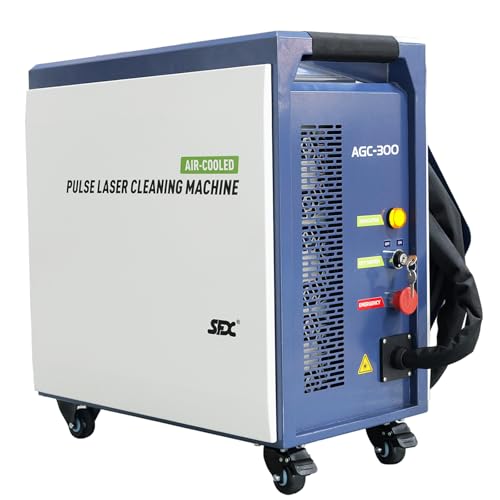
LYXC 300W Air-cooled Laser Cleaning Machine Pulsed Laser Cleaner AGC-300
- Pulsed or continuous source
- Stated in the listing
- Laser power
- Stated in the listing
- Scanning width
- Not published
XINCHENG PRECISION
XINCHENG PRECISION US STOCK SFX 300W Portable Air-cooled Pulse Laser
- Pulsed or continuous source
- Stated in the listing
- Laser power
- Stated in the listing
- Scanning width
- Stated in the listing
T TRIUMPH
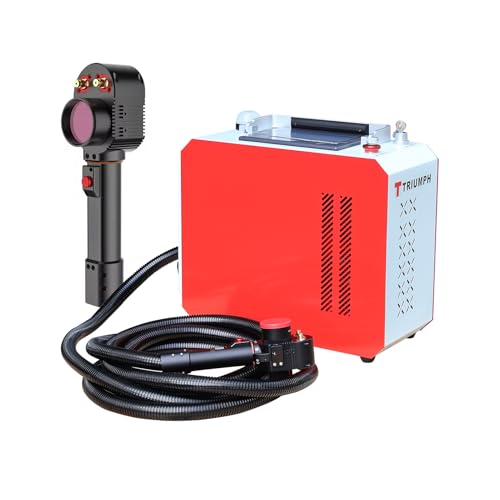
Triumph 300w Pulse Laser Rust Remover Laser Rust Removal Machine Pulse
- Pulsed or continuous source
- Stated in the listing
- Laser power
- Stated in the listing
- Scanning width
- Stated in the listing

NOUALASER
NOUALASER 2000W Laser Cleaning Machine Laser Rust Remover Double Wobble
- Pulsed or continuous source
- Stated in the listing
- Laser power
- Stated in the listing
- Scanning width
- Stated in the listing
T TRIUMPH
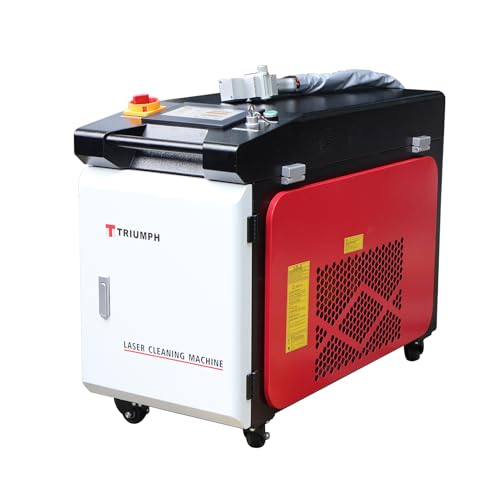
Triumph Laser Rust Remover 2000W Laser Rust Removal Machine Continuous
- Pulsed or continuous source
- Stated in the listing
- Laser power
- Stated in the listing
- Scanning width
- Stated in the listing

XINCHENG PRECISION
XINCHENG PRECISION US Stock 1500W Air-Cooled Laser Cleaning Machine
- Pulsed or continuous source
- Stated in the listing
- Laser power
- Stated in the listing
- Scanning width
- Stated in the listing

ZAC
Zac 1500 W Air-Cooled Laser Cleaning Machine Portable Rust Paint Oil
- Pulsed or continuous source
- Stated in the listing
- Laser power
- Stated in the listing
- Scanning width
- Stated in the listing

Ironsten
Ironsten 2000W Laser Rust Remover Laser Cleaning Machine Laser Rust
- Pulsed or continuous source
- Stated in the listing
- Laser power
- Stated in the listing
- Scanning width
- Stated in the listing

T TRIUMPH
Triumph Laser Rust Remover 1500W Laser Rust Removal Machine Continuous
- Pulsed or continuous source
- Stated in the listing
- Laser power
- Stated in the listing
- Scanning width
- Stated in the listing

Ovsuqu
Ovsuqu 200W Pulsed Laser Cleaning Machine For Wood/Metal Rust/Oil/Paint
- Pulsed or continuous source
- Stated in the listing
- Laser power
- Stated in the listing
- Scanning width
- Not published
“Stated in the listing” means the seller printed the figure somewhere in the title or the bullets. It is not a verification, and “not published” is a fact about the listing rather than about the product.
What the listings state, and what they leave out
Counted across every listing we track in this category, when this page was built.
| Specification | Listings stating it | Why it decides the purchase |
|---|---|---|
| Pulsed or continuous source | 13 of 13 | A continuous source is faster and hotter and will mark the metal under the rust. A pulsed one lifts the oxide and leaves the substrate, which is why a 300W pulse machine costs more than a 2000W continuous one. Wattage alone does not tell you which you are buying. |
| Laser power | 13 of 13 | Power sets how fast an area is cleared. On these machines it runs from 200W to 2000W at three times the price, and it is the number every listing leads with. |
| Scanning width | 11 of 13No scanning width stated | The width the head clears in one sweep is what turns power into a rate of work. A machine quoting 2000W and no scan width has left out half of the throughput figure. |
| Supply voltage and phase | 9 of 13No supply voltage stated | These are 220V industrial tools and a standard US general-purpose outlet is 120V. Whether the listing says so decides whether the machine runs on the day it arrives or waits for an electrician. |
A count of what the listing says is not a count of what the product does. A seller who omits a figure has told us nothing about the product, only about the listing, and these rows are worded that way on purpose.
What each maker publishes about its own machine
These are sold as portable and the gun is; the maker puts the continuous machine at 170kg and cools it with an industrial chiller. Of the three machines here whose own documentation we have read, one lists a 110 V option, and it is a pulsed machine, at a fraction of the power and under half the scanning width. Every figure below is quoted from the manufacturer’s own documentation, with the date it was read.
| Machine | Source, as the maker words it | Scanning width | Supply the maker states |
|---|---|---|---|
| Triumph 300w Pulse Laser Rust Remover Laser Rust Removal Machine PulseTriumph Laser: Pulse Laser Cleaning MachineRead 2026-08-24 | Pulse | 130mm | AC220V/50Hz or AC110V/60Hz |
| Triumph Laser Rust Remover 2000W Laser Rust Removal Machine ContinuousTriumph Laser: Laser Cleaning Machine (TR-HLC, continuous)Read 2026-08-24 | Continuous (CW laser cleaner) | 0-300mm | 220VAC (-15% to +10%) Single-phase |
| Triumph Laser Rust Remover 1500W Laser Rust Removal Machine ContinuousTriumph Laser: Laser Cleaning Machine (TR-HLC, continuous)Read 2026-08-24 | Continuous (CW laser cleaner) | 0-300mm | 220VAC (-15% to +10%) Single-phase |
Everything Triumph Laser publishes about the Pulse laser cleaning machine, 300W
| Wavelength | 1064nm |
|---|---|
| Cooling | Air Cooling |
| Power options published | 200W / 300W |
| Pulse frequency | 1-10000HZ |
| Laser source options | MAX / JPT / Raycus |
| Fiber length | 5m |
| Swing modes | 8 modes including line, rectangle, circle, ellipse, and sine |
| What the maker says pulse is for | Pulse lasers deliver high-powered bursts of energy in short intervals and are ideal for delicate surfaces; continuous lasers provide steady, high-energy beams suited for heavy-duty applications and thicker coatings |
Triumph Laser: Pulse Laser Cleaning Machine, read 2026-08-24
Everything Triumph Laser publishes about the TR-HLC continuous laser cleaner, 2000W
| Wavelength | 1080nm ± 10 nm |
|---|---|
| Cooling | Industrial Chiller |
| Machine weight | 170kg |
| Power options published | 1000W / 1500W / 2000W |
| Power tunability | 10 to 100% |
| Maximum working distance | 800mm |
| Operating temperature | +10 to +40℃ |
Triumph Laser: Laser Cleaning Machine (TR-HLC, continuous), read 2026-08-24
Everything Triumph Laser publishes about the TR-HLC continuous laser cleaner, 1500W
| Wavelength | 1080nm ± 10 nm |
|---|---|
| Cooling | Industrial Chiller |
| Machine weight | 170kg |
| Power options published | 1000W / 1500W / 2000W |
| Power tunability | 10 to 100% |
| Maximum working distance | 800mm |
| Operating temperature | +10 to +40℃ |
| What the maker says it removes | Rust, paint, oil, grease, coating and other stains from surfaces |
Triumph Laser: Laser Cleaning Machine (TR-HLC, continuous), read 2026-08-24
How these figures were producedSources, refresh cadence, and what we do not claim
Nothing on this page is a review. Laser Oracle does not test machines and does not claim to. Where a manufacturer publishes a specification document, this page quotes it and names the page and the date it was read; three of the machines here have one. For the rest, the listing doing the selling is the only thing there is to measure. Every claim quoted from a listing is the seller's own wording, and the counts are our measurement of those listings rather than of the products themselves. Prices and category rankings are read from the Amazon Product Advertising API and refreshed every three hours. Listing wording is read on the date shown on each product page, and every count is taken again whenever the catalogue changes.